Showing posts with label Pep Guardiola. Show all posts

Wednesday, April 2, 2014

Barcelona pay penalty for being smartest guys in the room

The news that Barcelona have been hit with a two-window ban on signing new players for improperly acquiring international players under the age of 18 is a second legal strike against the Catalan giants.

With the book-fudging purchase of Neymar costing the club approximately €90 million and a President, the repeated infraction of FIFA’s policies governing youth transfers suggests the club’s boardroom sees the Blaugrana as above the pesky laws of an admittedly arcane and (mostly) impotent governing body.

The precise nature of the sanctions are yet to become clear; questions remain as to whether deals already completed (such as the purchases of Victor Valdes’ replacement, Marc-Andre ter Stegen, and another “Next Messi”) will in fact be voided. Were this to happen, the club would find itself very much galloping down diarrhea drive without a paddle – or a boat.

This year, the club will lose Valdes and their own personal Heimdall Carles Puyol. Rumours persist as to the eyes Xavi Hernandez makes at MLS, and specifically NYCFC. Thiago Alcantara, perhaps the most exciting prospect to exit La Masia in years, now plays for Bayern Munich. In the event of a Gerard Pique injury, next season’s defensive nucleus could conceivably be the immortal trio of Jose Manuel Pinto, Javier Mascherano (meh, as a central defender) and one of Alexandre Song (ugh) or Marc Bartra (more palatable and infinitely more likely).

Pep Guardiola and his loveable bunch of mosquitos often played the role of the “goodies” in the black and white dramedy of La Liga football – which side was which coming very much down to the conscience of the individual spectator. While beholding to a pattern of play and players who have “always been Barca”, this on-field levity, utterly unapparent in their great domestic rivals, is now to have masked a questionable recruitment policy the club thought would (or could) be overlooked.

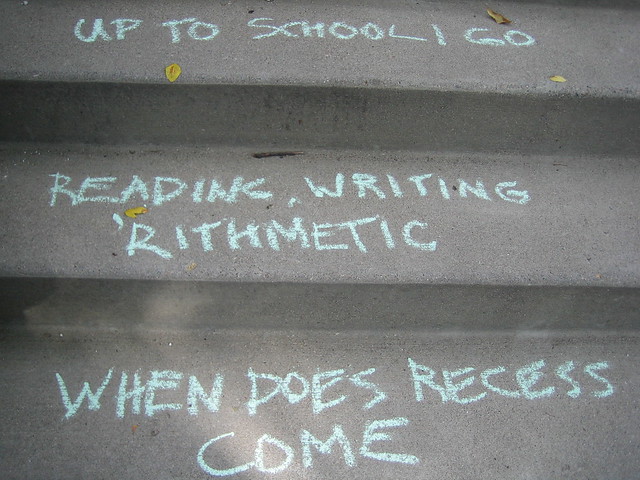
They were going to out-Wenger the continent. Illegally – those La Masia graduates weren’t all homegrown, but sapling transplants like Lionel Messi. Primary education matters – if a child is not taught early to read and write, how can they be expected to perform trigonometric calculus?
http://farm7.staticflickr.com/6233/6310951736_005cb90698_z.jpg
All over the footballing world, teams rise and fall – only precious few stay perpetually as true Champions’ League threats. When clubs rise – especially as high as Barca have – questions are usually asked as to the fairness of such a rise: people now regularly and rightly ask how much of its magickal, whimsical appeal football loses when run by stock analysts. While Manchester City and Paris Saint-Germain now field two of the more star-studded outfits in the game, there is something unseemly about the nouveau-riche attitudes that have taken them there.

Barcelona has competed at the most elite of levels with a squad of guys who’ve played together for many years, through the club’s academy and reserve squads. However, some of these kids – including the “Korean Messi” – were rather more adopted than whelped. While this isn’t quite as uncouth as flashing great wads of cash, it may actually be more subversive in robbing grassroots football of its youthful optimism.

Thursday, August 8, 2013

Guardiola may not be Bayern Munich's Man of Steel

The new Superman movie, Man of Steel, does some things well.  It creates a plausible Superman back story, introduces a new dynamic into the Clark Kent/Lois Lane relationship and makes Kevin Costner somewhat likeable again after two decades of “meh”.  Despite making nearly $300,000,000 (or nearly three Gareth Bales) in its two-month run so far, the film pales in comparison with Superman and Superman II, movies made in the late 1970s directed by Richard Donner and Richard Lester.

MoS makes everything is more complex.  The stark, crystalline beauty of Krypton in the original films was turned by director Zack Snyder into George Lucas’ most lurid celluloid wet dreams as rideable flying lizards engaged troop carriers above a landscape seemingly composed only of mesas.  The Phantom Zone, the prison supposedly incarcerating Kryptonian antagonists is now a giant machine rather than a mirrored square of unknowable origin.  The film is visually more overwhelming, but rather than this making MoS a better movie, it shows up what shouldn’t have been attempted: redefining an iconic moment in film.

And this is the situation faced by Pep Guardiola as he takes over as head coach of German giants Bayern Munich.  He, the bright young director, has been charged with replacing Jupp Heynckes – one of the best managers in recent memory who in his last season led Bayern to a treble-winning season defined by masterful play and an intimidatingly balanced lineup.

Guardiola, like Snyder, has a preferred motif.  Rather than Pulis’ Sndyer’s wanton cyclic violence, Pep favours a possession game the likes of which the footballing world has rarely seen.  His Barcelona teams would regularly play keep-away for over 80% of their matches, moving their opponents marginally out of position again and again until fatal flaws became exposed.  However, Bayern’s outstanding past three seasons have been based upon a very different style: incision has come from Arjen Robben, Franck Ribery and Thomas Müller while bite has come from Bastian Schweinsteiger and Javi Martinez.

Barcelona’s triumphs were equated to “death by a thousand cuts”.  Bayern’s modus operandi was to take a scimitar and lop off the head.  Players like Schweinsteiger, Müller and Mario Götze are eminently capable of playing a ball-dominant style, does it suit them the way it did Xavi, Iniesta and Messi?

There’s every chance that despite significant talent upgrades (in the form of Götze and Thiago Alcantara) that Bayern fall short of last season’s lofty standards simply because of coaching.  That isn’t to say that Guardiola isn’t talented – he is – more that installing a coach who works rigidly in a fluid paradigm is a needless attempt at reinventing the wheel.  Heynckes orchestrated an epoch-defining team at die Roten was who will now be instantly re-booted. 

There is a time and a place for changing the artistic direction of a football club, but is that time immediately upon winning the European Cup and when the boss wants to stay?  Bayern were forced into signing Guardiola simply because he wasn’t likely to be available again any time soon.  The new man has claims at being the world’s best manager; but so too did the incumbent.  If Bayern had hoped to repeat as Champions League (and perhaps treble) winners, making such a massive adjustment to an iconic franchise may not be the best place to start.

Saturday, November 24, 2012

Abramovich, Benitez and Guardiola: bizarre love triangle

In 2007, Michael Voss, a former Brownlow medallist, inspirational club captain and widely-touted Premiership coach in waiting, had announced he wanted a head-coaching gig for the following season.  In quick response, three AFL clubs fired incumbent coaches to obtain the hottest leadership property available in years.  

When fallen league heavyweights Carlton effectively vacated their coaching staff only days after arch-rivals Essendon dispatched their coach of twenty-seven years, Essendon officials were overheard leaving Pagan’s final exit interview saying “They want the same guy we want”.  No-one had to clarify who that guy was.  Perhaps unwittingly – but probably not – Voss had cast a shadow over the entire league landscape that eventually cost three coaches their jobs.

Neither team succeeded in employing Voss, who went on to take over his former club, the Brisbane Lions.  This is perhaps to their benefit, as Voss’ five-year coaching record stands at 32 wins, 53 losses and a tie.
Once in a while, a coaching property so desirable enters the marketplace and every club with delusions of grandeur fall over themselves to acquire him.  Proverbial dead men walking walk no longer.  The spectre of the available coach stalks the landscape until he commits to a contract – usually at the club of his choice.  His resume is so powerful, so compelling that any destination club hedges their personnel bets ... just in case they get a chance to employ that one mystical, alchemical coach.

No, that coach is not Harry Redknapp – no matter how much he’d like it to be.

It’s Pep Guardiola.  Despite currently “on sabbatical” in New York, his avatar haunts the high-paid underperformers.  This week, interim Chelsea boss (come on, admit it – was he really anything else?) Roberto Di Matteo was dismissed only months after leading Chelsea to their first Champions League title.  While his team had underperformed in November, the phenomenon is hardly unusual.  Where Chelsea owner Roman Abramovich was in love with Mourinho, fascinated by Andre Villas-Boas and is infatuated by Guardiola, he barely even liked Di Matteo.

courtesy: mirror.co.uk
The new Chelsea manager is Rafael Benitez, a former Champions League winner himself, who agreed to coach the Blues only until the end of this season; in so doing, he has embraced his destiny as Abramovich’s rebound fling while the oligarch continues his unrequited love affair with the former Barcelona manager.

It’s not just the Blues of London who find themselves sweaty with anticipation of a glance from Pep: Roberto Mancini should probably look upon Txiki Begiristain’s appointment as Man City football director with dismay, Guardiola’s “philosophy” apparently mirrors that of Arsene Wenger, while Sir Alex Ferguson is thought to prefer Guardiola as his successor at Old Trafford.  Quiet overtures have been received from the Milan twins, AC and Inter and reports have emerged today that Brazil kind of fancy a dapper bald guy to succeed Mano Menezes.

Guardiola has unconsciously cast an enormous shadow over the entire coaching landscape that won’t be dismissed until he signs a contract.  And for this reason, the likes of Andre Villas-Boas, Di Matteo, Benitez – or indeed anyone managing a club with money – will find themselves victim to the whims of chairmen everywhere.

Wednesday, May 2, 2012

Pep Guardiola: football's J.K. Rowling

Pep Guardiola reels into the Catlunya spring sunset punch-drunk, deserving a rest, his job well done. Most agree that he's likely to take a significant break from management – perhaps an eternal one – before moving back to the scrutiny of club control.

To witness the change inhis appearance from appointment to last week's press conference is to see what daily hour-long media sessions will do to a man. He looks exhausted, has lost a considerable amount of weight and what remains of his hair is prematurely grey.

In many ways, I hope he chooses not to manage again. Particularly, I hope not to see him at a different, less stressful club. This may seem odd, given his record of dignified success; however, for him to return would be to risk a legacy which now stands unparalleled. He's won everything there is and leaves the game at his own discretion. To come back would not gamble his reputation; he will always be loved in Catalunya. But neither would – or could – it achieve anything of real substance. Those who suggest he's yet to assemble his own squad, or should attempt management overseas to complete his resume are snidely ungenerous.

He is/was great; he now moves forward. A four year term helming the greatest club side in memory saw him astride the world; to return from this break to boss a different club would subvert his stature as a Catalan deity, achieved the remarkable with his hometown club. His narrative shouldn't need to rely on piffling things like football management for completion. He is regarded at a different level from every other manager; his story becomes infinitely more compelling by refusing to countenance further management jobs.
(c) Balanced Sports

That he represents a standard of Catalunyan success and pride that transcends sport, leads me to remember the legacy of “Rocket” Richard.

The image to the right best exemplifies what Richard means to the Quebecois: this representation is one of a parade of Quebec heroes that stops Montreal, QC every St. John Baptiste Day.

His tale also mimics that of J.K. Rowling, the Omnipresence ruling over the magical (and tremendously marketable) world of Harry Potter. After suffering several high-profile bouts with writers' block and sustaining excellence and interest in teen writing for a decade, it was only fair to expect her to withdraw somewhat to recuperate. Her novels were so comprehensively successful – on every level – that she had achieved all she could.

Rowling announced last year that she was returning to the computer to write a new, adult novel (who features a major character named Barry!) due for release in September this year. Her background, audience and profit margin are nonpareil; to return to a different genre invites criticism. “The Casual Vacancy” will break all sales records, but will never be as well-received as Potter.

A craven viewpoint? Perhaps. But rather than seeing Guardiola (or even Rowling) return, I prefer the romantic narrative of someone leaving, and moving on. For Rowling, the case is exceptional – she feels she has a story to tell. “Artistic integrity”, that most nebulous of concepts, demands producing not what is expected, but representations of what moves one at the time. Guardiola, however tactically and interpersonally adept, is less artisan than mathematician. His integrity shouldn't compel him to return to management but to seek the next steps of a journey of exploration.

Tuesday, May 1, 2012

Graphic: Pep Guardiola over time

The things four years of crazy media exposure and inhuman stress levels will do to a guy.  The following photo shows Pep Guardiola at his introduction as Barca coach in 2008 and compares it to an image taken at the presser last week in which he announced he was leaving the club for a sabbatical.

Click to enlarge

Photo credits: fourfourtwo.com and thesun.co.uk 

Friday, April 27, 2012

The death of Barcelona?

Consecutive defeats to Real Madrid and Chelsea decry this season's Barcelona bandwagon is coming to a faltering and much-needed rest. That hiatus could be temporary or permanent, depending on new coach Tito Villanova's methods; manager in excelsis Josep “Pep” Guardiola confirmed today that he would not return to helm Barca in 2012-13.

There are reasons aplenty behind Barca's slip from the peak of Iberian – and world – football. Some are obvious, such as a squad which struggled to replace injured defenders, the disease of more, Guardiola's almost inevitable burnout and brutal opposition playing solely to absorb the pressure created by Barcelona's passing and then rebound. Key elements Xavi, Carles Puyol and Eric Abidal succumbed to chronic injury and pure bad fortune.

Perhaps the most important latent reason for their “drop” in form this season was that their game barely changed throughout the four years of Guardiola's reign. Why would you change such beautiful football? Guardiola's Barca evokes memories of the Game of Thrones scenes involving the swordmaster Syrio Forel, who in a world of broadsword hackery sees the sword as a weapon capable of beauty as well as efficacy. Forel saw swordplay at a more advanced and exquisite level than his peers.

Courtesy: thesun.co.uk
The past four years of Barcelona football, 2008-09 and 2009-10 especially, has borne witness to such an advanced philosophy. They are the Forel of world football, with a mode and method far in advance of their rivals. However, as anyone who has read/seen the first installment of Game of Thrones will attest, this hardly makes such learning untouchable.

The problem with employing such an advanced method in the age of video is simple: others observe. In any pro sport, what works one year rarely works the following because others catch on, catch up and overtake. When the peloton can take advantage of tools like Synergy Sports and Opta Joe, a sporting thought-leader needs to constantly evolve its game plan on a conscious and subliminal level. Not only do clubs need to do better the basic elements of what they do, but they also need to expand upon those components.

Although a “Naomi Campbell” – a thing of terrifying beauty – Barcelona's modus operandi remained at a stillpoint which enabled dissection and planning.

The counter-argument of “If it ain't broke” has merit. If Barcelona played to their best, they would still defeat every other team in the world without a qualm. It places the squad in a vacuum, reducing competition to a pub discussion “with all things equal”. We watch sport because things aren't equal. The Bell Jar doesn't require a team who has had success at every level to reach their potential each new day amidst injury, form slumps and personal crisis. The continued growth of Barca's game may have provided alternatives on which to fall back during these times.

If a club or player attempts to expand – not re-shape completely – their game, those efforts are never detrimental. Rare is the club who truly succeeds by paring their repertoire back to the basic elements and focusing their play through only one locus. There must be alternate “looks” or second and third avenues down which to play. Over the past year Barcelona haven't provided many different looks; it's compelling testament to their greatness that they were so successful.

It interesting to note that their original Plan B – the Zlatan Zeppelin – arrived and departed within a year. Purchases over the past two years have been like-for-like: Villa, Mascherano, Sanchez and Fabregas. They sold different players like Oriol Romeu and Bojan – committing firmly to the pass-and-move. The instant players wore down or Messi (heaven forbid) was to be injured, the Barcelona underbelly would become instantly exposed. Taking advantage of this glimpse of vulnerability would still need a combination of hard work, skills and brains; but for certain clubs, a victory would now be possible.

Should he want to regain the Spanish crown, Villanova should maintain the same techniques that achieved such Barcelona grace. However, he also needs to make changes significant enough to both tactically outpoint Los Blancos and revitalise his charges. In 21st century football, homogeneity is the ultimate enemy. Change, for its own sake, is needed at the Camp Nou.

An old adage posits that without losing, winning is meaningless. This iteration of Barcelona, as excellent as they are, will now instinctively place more value on their wins.

Thursday, April 28, 2011

UEFA Champions' League: Sergio Busquets, the most hated man in Spain

For a someone playing a crucial role for two of the most lauded clubs in recent history, Sergio Busquets is perhaps both the man who does the dirty work and the face of a popular dictatorship. In other words, Sergio Busquets may be the most hated man in Spain outside Catalunya, a player Spain forgives only when his stunts are used (from their perspective) for their team - another popular autocracy.

Barcelona - and Spain - rule world football. They are the two best teams in the world today and there is much overlap between them as many of the Spanish national team play their club football for Barca - including Busquets, Xavi, Iniesta, Carles Puyol and Bojan. In a league where spectators are forced to tacitly support one of the "Big Two" as well as their own preference, certain players who irritate when playing against your side become fast favourites.

Not so with Sergio Busquets. That's not to say he's not a wonderful footballer - he is almost everything you could want from a defensive-minded midfielder - but his big stage playacting (see here for one example) during yesterday's Champions' League SuperClasico may well have proved the final straw for many neutral observers. In Facebook terms, he will have gone from "Like" to *Dislike* for many neutral observers. Roundly condemned by Madridista fans and commentators alike, his - and other Barca players' - overexaggeration of several minor incidents irritated so much that a game which should have been a wonderful spectacle (and at times was, especially Lionel Messi's marvellous solo goal to seal the win) was overshadowed by the Dark Arts - diving and exaggerating contact to attract free kicks or cards.

Outside Barcelona - where too his actions should not be lauded - it's likely that his performance last night attracted Busquets no fans, and indeed the ire of several sections of press and supporters. UEFA make a habit of not wanting to set precedents and as such are unlikely to sanction him for his actions, especially when the game also prompted a brawl, a foul-mouthed Pep Guardiola presser, Jose Mourinho sent to "The Cage", an arguable red card for Pepe, further alleged diving incidents from Pedro and Dani Alves and finally, a war of words since the match leaving Barcelona investigating a formal complaint.

While many individuals involved with yesterday's encounter appear the worse for their actions and antics, it is Busquets who will almost undoubtedly come off amongst the worst. Firstly, he has priors for "simulation". Secondly, for a Spaniard it's impossible to get a larger stage than a Champions' League Semi-Final against Real Madrid - a match which nominally forces the entire of Spain to choose a side (in a World Cup final, the vast majority will be supporting Spain already).

Finally, these actions only reinforce his popular perception (at least by pundits on ESPN and the Guardian's Football pages) as a player who dabbles - and occasionally dives headlong into - the dark side of the force. Mourinho, though his postgame statements reek of paranoic mania, has a history of playing people offside with his comments and doesn't play such a crucial role in the Spanish national setup. Where Jose seems to have accepted his role is to be disliked by everyone other than fans of his current employers, Busquets must face Euro 2012 next year as one of the faces of a Spanish midfield. He may not be looked at in quite the same way again by the neutral.

Monday, April 25, 2011

Copa del Rey provides Real Madrid's "Predator" moment

To the Madridista, last week's Copa del Rey win wasn't just tacit validation of Florentino Perez's updated Galacticos - version 2.0 - but also proof that this may well have been Jose Mourinho's Predator moment: the instant a challenging club doesn't just reason instinctively that the champ is vulnerable, but has sees and, crucially, believes they can exploit that weakness.

The expression was popularised in Australia in 2001, when the coach of the AFL's Brisbane Lions, Leigh Matthews, announced of a seemingly indomitable Essendon "If it bleeds, we can kill it". In doing so, he echoed Arnold Schwarzenegger's iconic phrase from the 1987 Action extravaganza Predator and his comments were lapped up by thirsty national media outlets desperate for another angle on the brutal Bombers. Last week in the Copa, Los Merengues not only discovered for themselves that Barcelona were a team of humans but also, that they had themselves several advantages over the Catalans.

While Real did not dominate the game, neither did Barca. Given Mourinho's success last year in negating the Catalans with Champions' League winners Inter Milan and his setup for their 5-0 thrashing at the Camp Nou earlier this season, Los Merengues were hardly likely to try and beat Barca at their own game. Both enjoyed periods of dominance in the archetypal "Game of Two Halves" and perhaps the greatest obvious difference between the two was up front, where a misfiring David Villa was overshadowed by flashes of brilliance from Real pair Angel Di Maria and Cristiano Ronaldo.

And it's not just that Villa is still to score in eleven matches where Barcelona should be concerned. Their bench had no further attacking substitutes, with only recent signing Ibrahim Afellay and youngster Thiago Alcantara able to reinforce the offence. That pair sat alongside defence stalwarts Puyol, Maxwell, Valdes and Milito. In contrast, Real Madrid could have brought on any of Emanuel Adebayor, Kaka, Karim Benzema or Gonzalo Higuain. As irresistable as Barcelona has been for nigh-on three years, there are definite cracks in their pristine veneer. If any manager is capable of revealing them so apparently, it would surely be Jose Mourinho.

That's not to say that all is lost for the Catalans. Rather than opting for one of his central defenders, Pep Guardiola opted to use midfielder Javier Mascherano at centre-back who was often overwhelmed in the air by both Cristiano Ronaldo and Adebayor; the latter so impressive during his cameo appearance that it must make both Roberto Mancini and his dutiful Man City fans feel thoroughly used. Also worth considering is that neither the inspirational Puyol, sprite-like Bojan nor the inadjectivable Jeffren played for Barcelona. With their style of football and the players at their disposal (and there's good reason to think that in Iniesta, Xavi and Messi they boast three of the top four players in the world - if not the best three) their game is hardly likely to drop over the next few years. Xavi is the oldest of that trio at the grand old age of 31.

Now having played their nemeses three times this season, Mourinho's men sport a record of 1-1-1 against the men from Catalonia. With each increasing match, their results have improved: a 5-0 thrashing away in La Liga during November, a draw in the first of four consecutive Clasicos last week again in La Liga, and now a win in the Cup, albeit in added time. It could be that with those most vital matches approaching - their Champions' League Semi-Final - Mourinho's men have fostered enough self-belief to unseat the club many rush to call Best Ever.

With the third of four Clasicos due on Wednesday, Mourinho's match preparation should include playing his men a worn-out VHS copy of Predator. They believe it now - Barcelona can be beaten. Whether Barcelona fall into the same traps, depends on if they learn faster than a superintelligent, totally camouflaged alien killing machine. The bet here is they will - meaning another fantastic match on Wednesday.